ACADEMICS
The Memorial University Engineering Society is more than just a student leadership group - it's a community dedicated to supporting its members throughout their engineering journey.
From the moment you join, the society provides a wealth of resources designed to enhance your learning experience. This includes access to academic support services, mentorship programs, and opportunities to engage in innovative projects. Moreover, the society fosters a collaborative environment where students can share ideas, learn from each other, and build lasting relationships. Through various events and activities, students can connect with their peers, network with industry professionals, and gain valuable insights into the engineering field. Ultimately, the society is committed to helping you succeed, providing the tools, guidance, and support you need to reach your academic and career goals.
Get the most out of your co-op experience
Students from Memorial University's Bachelor of Engineering co-operative program are fortunate to have the opportunity to combine academic and practical education through a series of 4 month work terms. While the Co-op Handbook contains most information, this page is to be used as an additional resource to help you navigate the co-op office's expectations.
Information regarding important dates for Work Terms and their course outlines can be found in the following link:
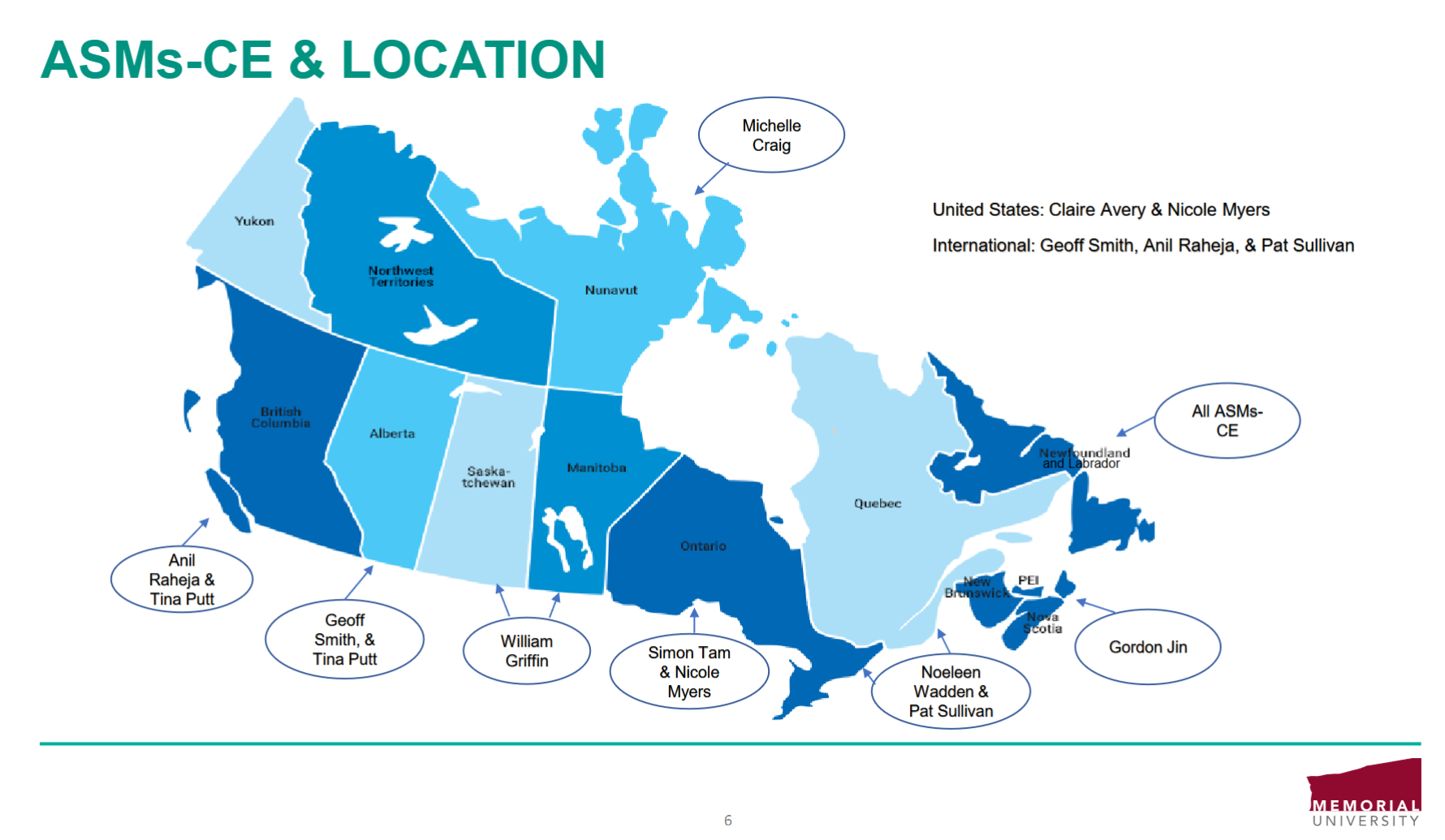
If you want to do a Work Term outside of the province (even internationally), we recommend contacting the ASMs-CE (Co-op Office staff) responsible for the province or country you aim to work with. They can provide more information on things you may need to do before going there, work terms available there, acommodations, etc. Their contact information can be found in the Co-op office website linked above.
How to claim Work Terms towards your P.Eng
After half of your degree has been completed (term 4 for us at MUN), up to 12 months of Work Term experience can be claimed for your licensure. 48 months of engineering experience is required for a graduate of the engineering program to receive their professional engineering license with PEGNL. In the past, this required the use of logbooks and an experience evaluation, which have both now been replace by a Competency Based Assesment (CBA). PEGNL conducts presentations in latter terms to explain this process to engineering students, but for the Work Term experience to count, you will have to collect some information necessary for them to assess your experience. They have mentioned these details:
- Employer Name
- Supervisor Name
- Title
- Contact Information
- Descriptions of the main projects and responsibilities you had
As students, we do not yet have access to the CBA system, but once you apply for your license, you will be able to add the experience you have gathered in your Work Terms. For more information, please look at the CBA site and the FAQ by PEGNL.
Engineering Mentorship Program
Students who are transitioning into a new stage of their academic career are often faced with many questions and uncertainties. Connecting with other students who have recently made a similar transition—their peer network—can be invaluable as a source of information and support for these new students. The Engineering Mentorship Program (EMP) connects incoming engineering students with more senior students in the program to help them establish their network.
How it works
Students who are currently enrolled in, or have been accepted to Engineering One (mentee) can sign-up and will be paired with a senior student (mentor) based on preferred major or other interests.
Mentors and their mentees are encouraged to meet, either in-person or virtually at least monthly.
The Engineering Student Society will organize various events for all mentors and mentees to enable more broad networking and discussion of topics of interest.
These events are normally organized in the Fall, but another event could be organized during the Winter semester. Keep an eye on our social media to get more info about it!
Cahill Engineering One Student Success Centre
There's a reason everyone gets the 'look to your left, look to your right' speech when you join engineering... do not be those guys! The Engineering One Help Centre is a great chance to learn all that course material that you're struggling with. (Pro tip: start trying to actually learn that material, oh, you know, not the night before your big midterm or final... just trust me on this).
Math Help Centres
For those in EO or Naval or maybe those just doing a bitta extra math courses for fun, this is a great opportunity to get help on your assignments and understand your courses.
Chemistry Help Centre / Resource Room
For those in EO or Process, these are located in the Chemistry-Physics building in rooms C 2022 and C 2012 respectively.
The Writing Centre
This is a fantastic resource you can use throughout your entire degree. The Writing Centre is not only useful for your English courses, they can help you with your reports and term papers too. Also, for those work term reports, the staff at the Writing Centre can help you by distance as well.
The Physics Help Centre
This centre is designed specifically for first-year physics students and is staffed by professors, assistants, and physics majors. The staff schedule is posted at the beginning of each semester so students can check when their professor is scheduled to work.
MUNSU Resource Centres
Many of these resource centres were started to help represent minorities on campus. These are amazing places to go if you would like some peer support or information. Currently, there are 7 resource centres supported by the student union:
- Aboriginal Resource Centre (ARC)
- Disability Information and Support Centre (DISC)
- International Students’ Centre (ISC)
- Lesbian, Bisexual, Gay and Transgender (LBGT-MUN)
- Student Parents’ Resource Centre (SPRC)
- Students Older Than Average (SOTA)
- Women’s Resource Centre (WRC)
Walk-safe Drive-safe
WalkSafe is a student-run program that offers students, faculty, staff, and guests of the university accompaniment when walking around campus after dark. Just call 864-6464! SafeDrive is a free service offered for students by MUNSU, providing rides home from campus during the Fall and Winter semesters. It operates from 7pm to 12am, Sunday to Thursday, with extended hours during exam periods. The SafeDrive van leaves every hour on the hour from the base of the clocktower, just outside the Queen Elizabeth II Library.
Counselling Centre
Through individualized personal counselling, outpatient psychiatric services, and a wide range of group counselling, professional staff and faculty at the Centre, with the assistance of supervised doctoral residents and practicum students from the various training programs on campus, help students to develop their own unique resources. The Counselling Centre helps students develop their study strategies, support for study problems, and help students learn to apply strategies for managing university-level academic work more effectively.
Scholarships and Awards Program
Student Affairs and Services administers the Scholarships and Awards Program for the University, distributes out-of-Province Financial Aid, and emergency financial aid.
International Student Discord Server
If you are an international student, please join our Discord with the link below! We will post information about events and announcements that might be relevant to you, like being able to lend an Arduino kit, how to get your Work Permit, and much else.
If you have any questions, do not hesitate to reach out to us through social media, or to the Director of International Representation of your society.
Capstone Projects
Explore final year engineering capstone projects from Memorial University students.
Class Year
Class of 2026
Discipline
14 projects
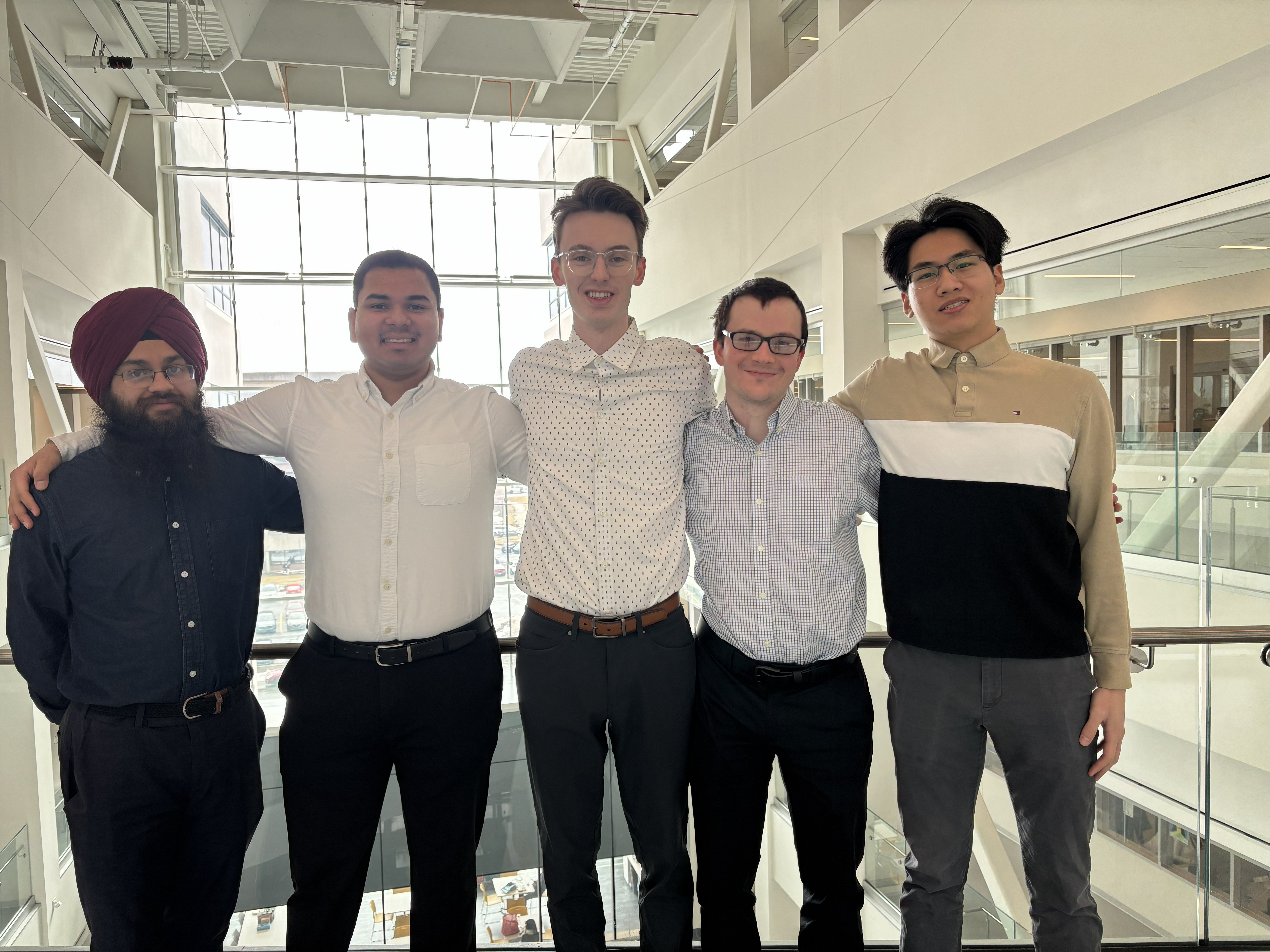
μBot
Jacob Hickey, Duc Huy Ngo, Nicholas Philpott, Arya Salwan, Harnoor Singh
μBot is a compact, low-cost swarm robot designed specifically for academic research applications. The goal of the platform is to enable scalable, reliable, and accessible swarm robotics experimentation.
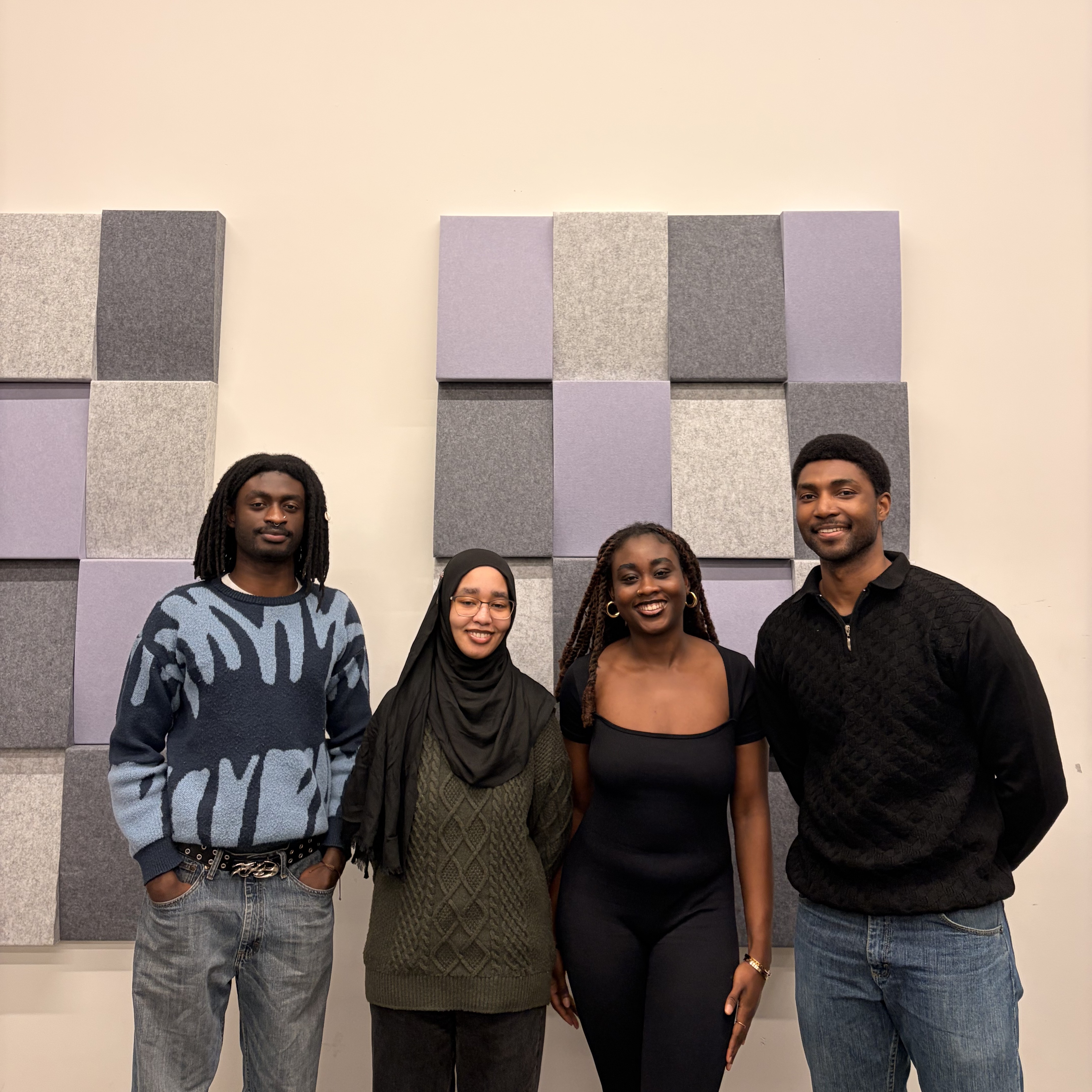
AIDE
Wesley Aubynn, Nicole Bishop-Adigwe, Hageer Birama, Chinedu Obi
The AIDE project, short for AI-Driven Engineering or AI Integrated Design Environment depending on context, is a system that uses artificial intelligence to assist engineers in designing and optimizing complex systems more efficiently. It combines large language models, simulation tools, and domain-specific data to automate tasks like generating designs, analyzing performance, and suggesting improvements. In analog circuit design, AIDE acts as a smart assistant that can generate netlists, recommend component values, and predict circuit behavior, reducing manual effort and speeding up the entire engineering workflow.
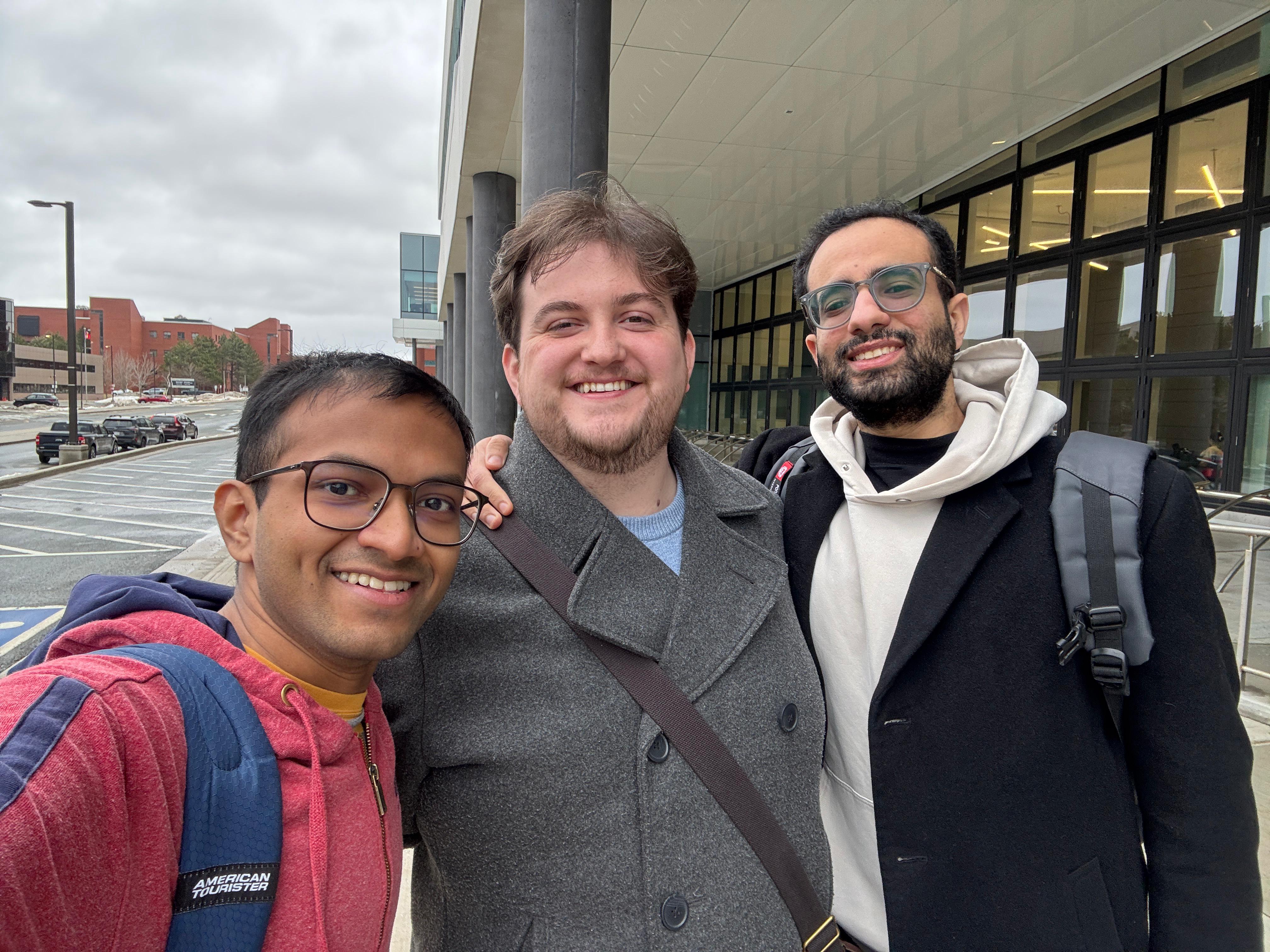
EyeOS
Moaaz Elshabasy, Matthew Fewer, Akash Samanta
EyeOS is an accessibility-focused software system that enables hands-free computer control using low-cost webcam-based eye tracking. It allows users to move the cursor, click, drag, scroll, type, and trigger voice commands through eye movements, blinks, mouth gestures, and optional pedal input, reducing reliance on traditional mouse and keyboard interaction. The project is designed to provide an affordable and practical assistive technology solution for users with limited mobility across everyday computer tasks.
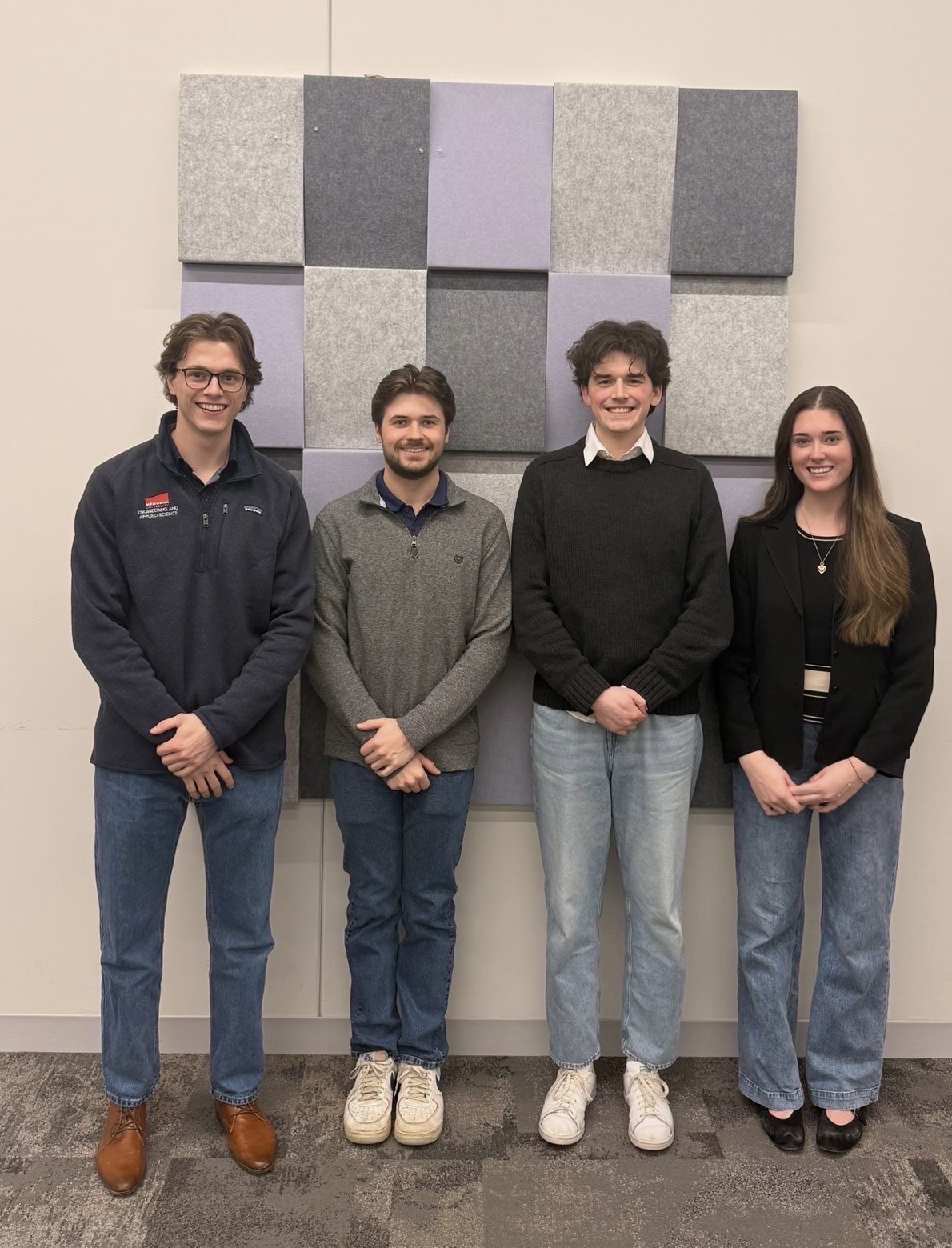
Making Highway Driving Safer - Roadside Hazard Detection
Jacob Gillis, Michael Mallay, Ben Thomas, Kate Williams
An on-vehicle moose detection and alert system to improve driver safety in NL. The system uses thermal imagery to capture heat signatures of the environment. A machine learning object detection model processes these thermal images in real-time to identify potential threats and trigger an audio warning to the driver. The system emphasizes driver safety, operation with limited visibility, and efficient real-time moose detection to address the moose-vehicle collision issue in NL.
Indoor Asset Tracking for Hospital Environments
Jordyn O'Brien, Miguel Pond, Mitch Roberts
Our project uses BLE tags and antennas to track hospital equipment and staff. Studies have shown that nurses spend over one hour each shift searching for equipment they need to care for patients, reducing time available for direct patient care. Additionally, over 90% of Canadian nurses have reported being physically assaulted by patients on the job. Our system allows healthcare workers to locate equipment and each other immediately, enabling more time for patient care and allowing immediate response during emergencies.

MiniBeat
Eli Brown, Abigail Hurley, Lance Mhaurice Labrador, Kyle Lynch, Jacob Norman
In 2026, Newfoundland's healthcare system used adult ECG Holter monitors for infants and toddlers. Our team designed MiniBeat, a custom flex PCB that collects the ECG signal free from wires. To improve the parents' experience with these take-home monitors, we also implemented a phone app to view the live ECG signal over Bluetooth, including activity and event logging suggested by physicians. Finally, we developed a web application for physicians to review the ECG signal overlaid with events, incorporating AI detection for AFib and allowing for easy report generation.
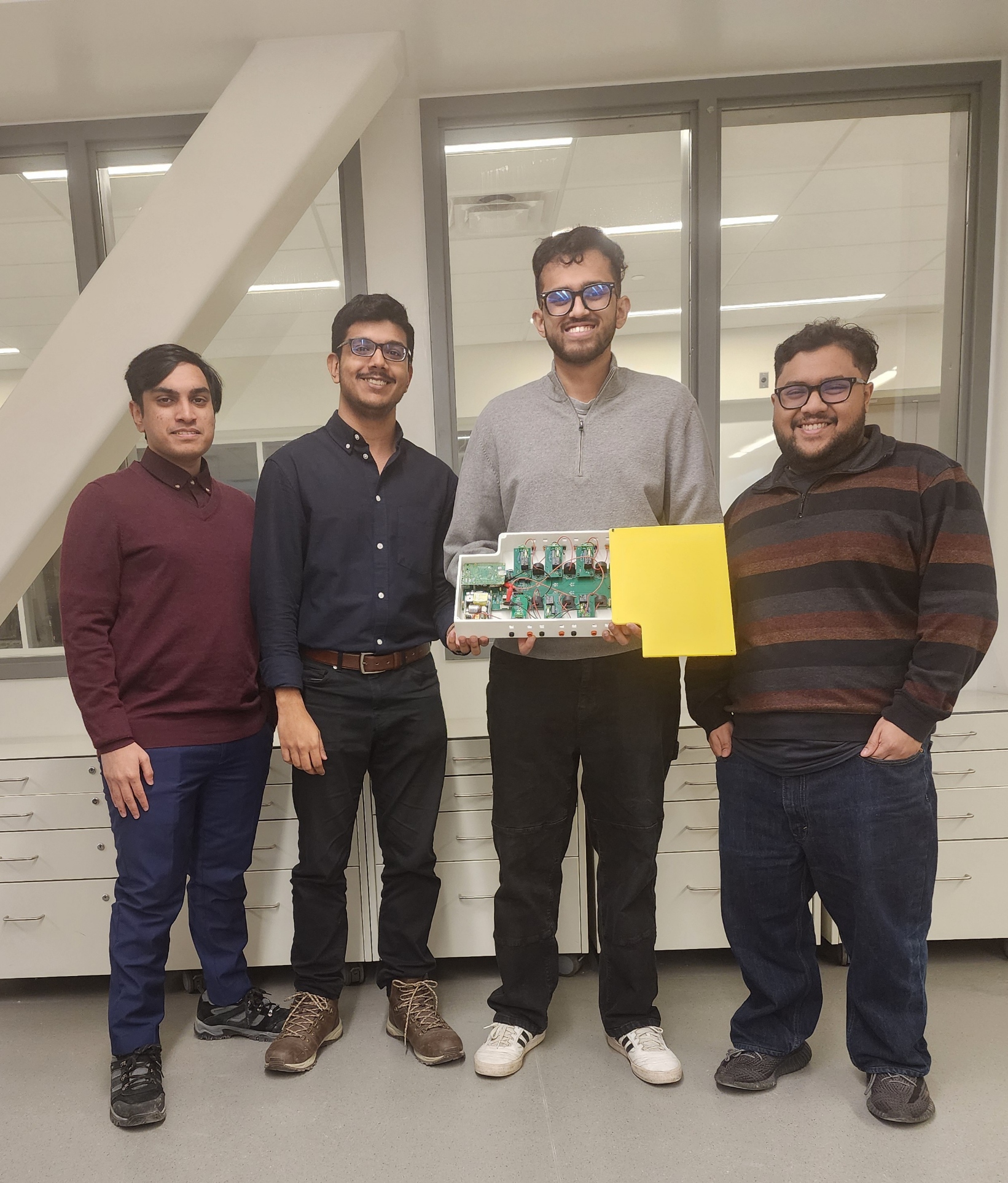
Smart Load Management System (SLMS)
Mohibun Chowdhury, Sajedul Hassan, Tanzim Masood, Aariyan Bin Shahariar
The Smart Load Management System (SLMS) is a residential energy management platform designed to give homeowners real-time visibility and control over their electricity consumption. SLMS addresses the challenge of rising electricity prices and Time-of-Use pricing by combining real-time electrical monitoring with intelligent load control. The system measures voltage, current, and power from household loads and transmits this data to a Raspberry Pi for processing. Appliances are categorized into three priority levels—critical, essential, and non-essential—allowing the system to automatically manage loads during high demand or peak pricing periods while ensuring critical devices remain operational.
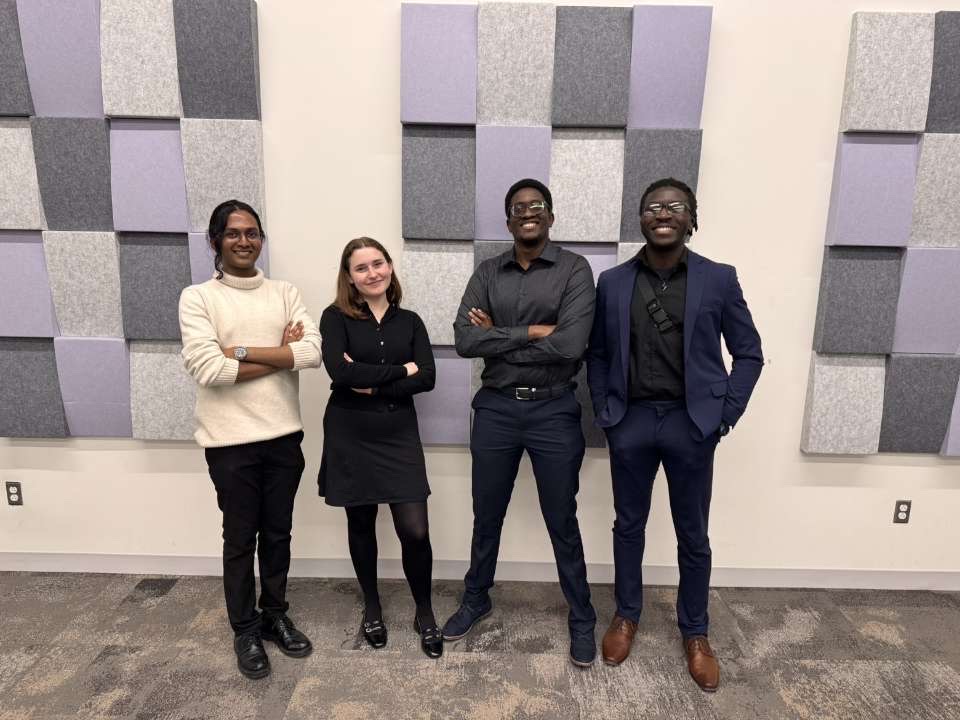
Rayvolution
Deven Chitanga, Sasanka Gamage, Hannah Jenkins, Mubarak Titilola
A household boost converter for solar panels in Newfoundland. It uses an MPPT (Maximum Power Point Tracking) algorithm to maximise input power and by extension output power for more overall efficiency.

Earworm
Noah Colbourne, Naomi Pierce, Ally Reid
Earworm is a mobile platform that allows users to rate, review, and discover music through community discussion and shared taste. The app combines user-generated reviews with structured music metadata to create a social space for exploring albums and connecting with other listeners.
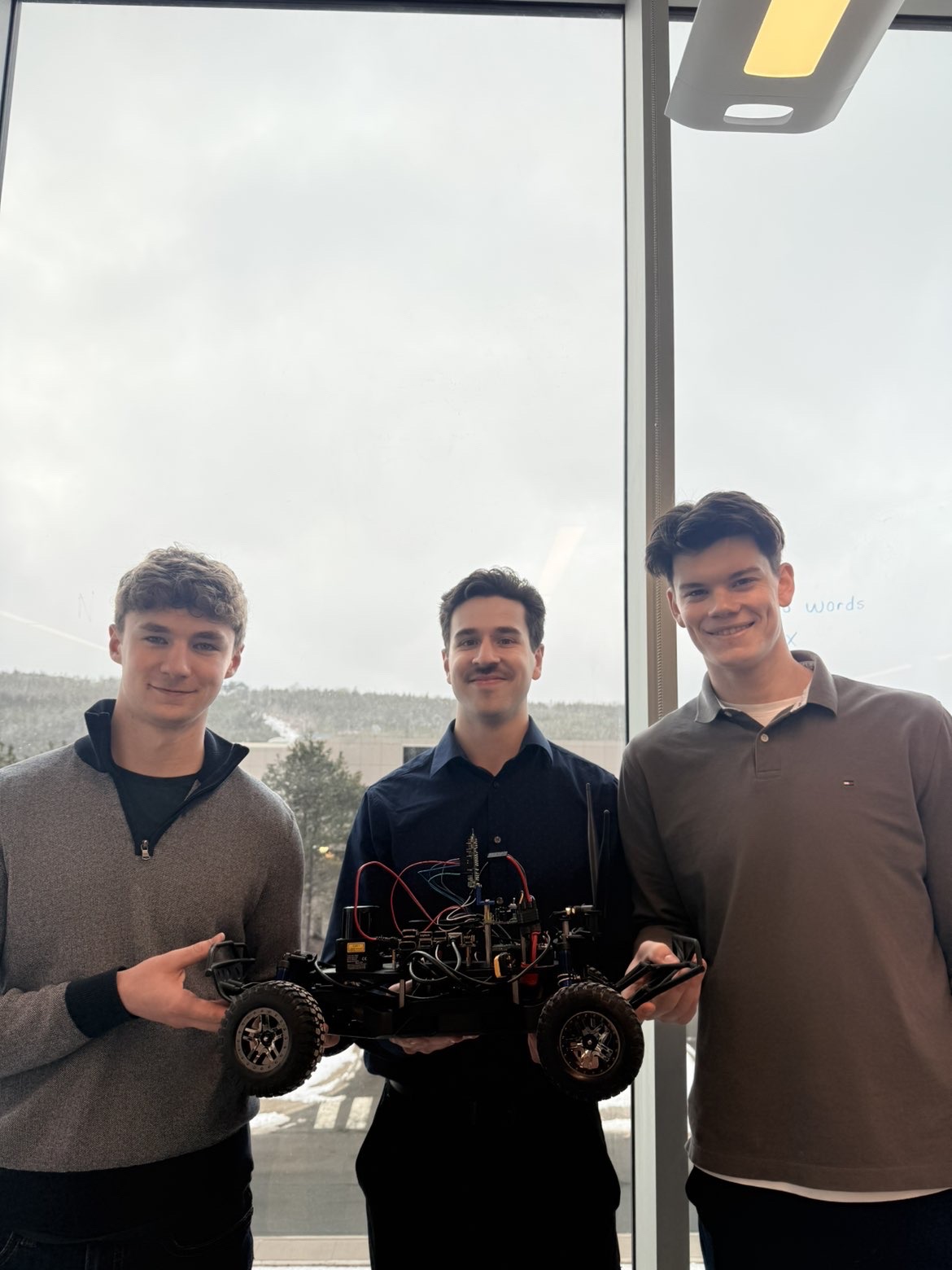
UWBot: Warehouse Navigator
Sam Beaulieu, Alex Kingsley, Liam Smith
By leveraging a sensor fusion combination of LiDAR, wheel odometry, and UWB (Ultra-Wideband) radio transceivers, our project aimed to combine these non-vision based localization tools to autonomously drive a robot through a dynamic warehouse-type environment. We specifically addressed the challenge of non-line of sight, where reflections and environment obstructions interrupt UWB signal pathways. By integrating a board that feeds live UWB signal data and signal quality diagnostics to an on-board computer, our system is a proof-of-concept demonstrating that this sensor fusion combination is a strong candidate for future research.
Antihypotensionator
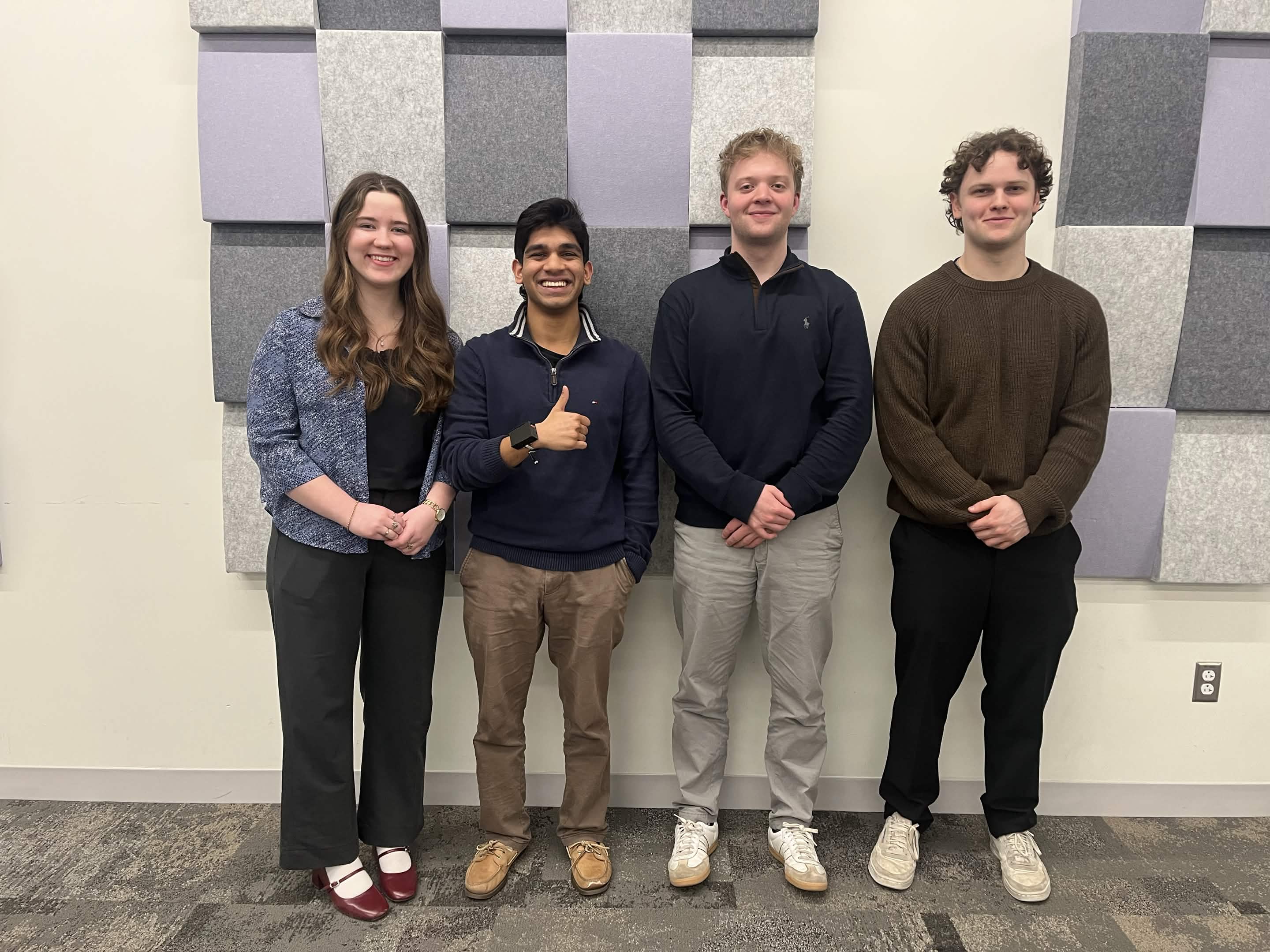
Zachary Coffey, Daniel Dolomount, Ayman Islam, Sophia White
Orthostatic hypotension is a sudden drop in blood pressure caused by sudden movements such as standing up, causing dizziness, lightheadedness, or fainting, usually affecting the elderly population. The Antihypotensionator aims to fix this. A custom PPG-based heart rate monitor constantly feeds heart rate data to an algorithm used to predict blood pressure. Using this prediction, a compression sleeve is autonomously inflated and deflated to regulate the user's blood pressure.
NeuroTrack
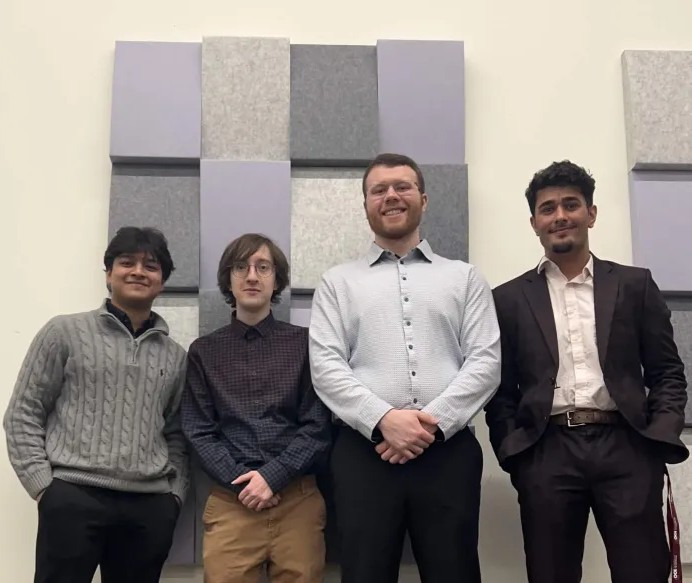
Aman Azad, Logan Janes, Jesse Lewis, Irwanpreet Sidhu
Alzheimer's is a progressive neurodegenerative disease that completely destroys thinking and memory skills. Rising case numbers result in long hospital wait times and hours of travel from rural areas to urban hospitals for expensive screening tests. In response, our team developed NeuroTrack, a portable and low-cost screening tool designed to help clinicians identify early signs of cognitive decline in patients who may be at risk of Alzheimer's disease. By catching warning signs sooner, clinicians can intervene earlier when lifestyle and therapeutic changes are most effective. NeuroTrack also supports ongoing monitoring of Alzheimer's progression, allowing clinicians to track changes in brain activity over repeated sessions without costly hospital visits.
DartBuddy
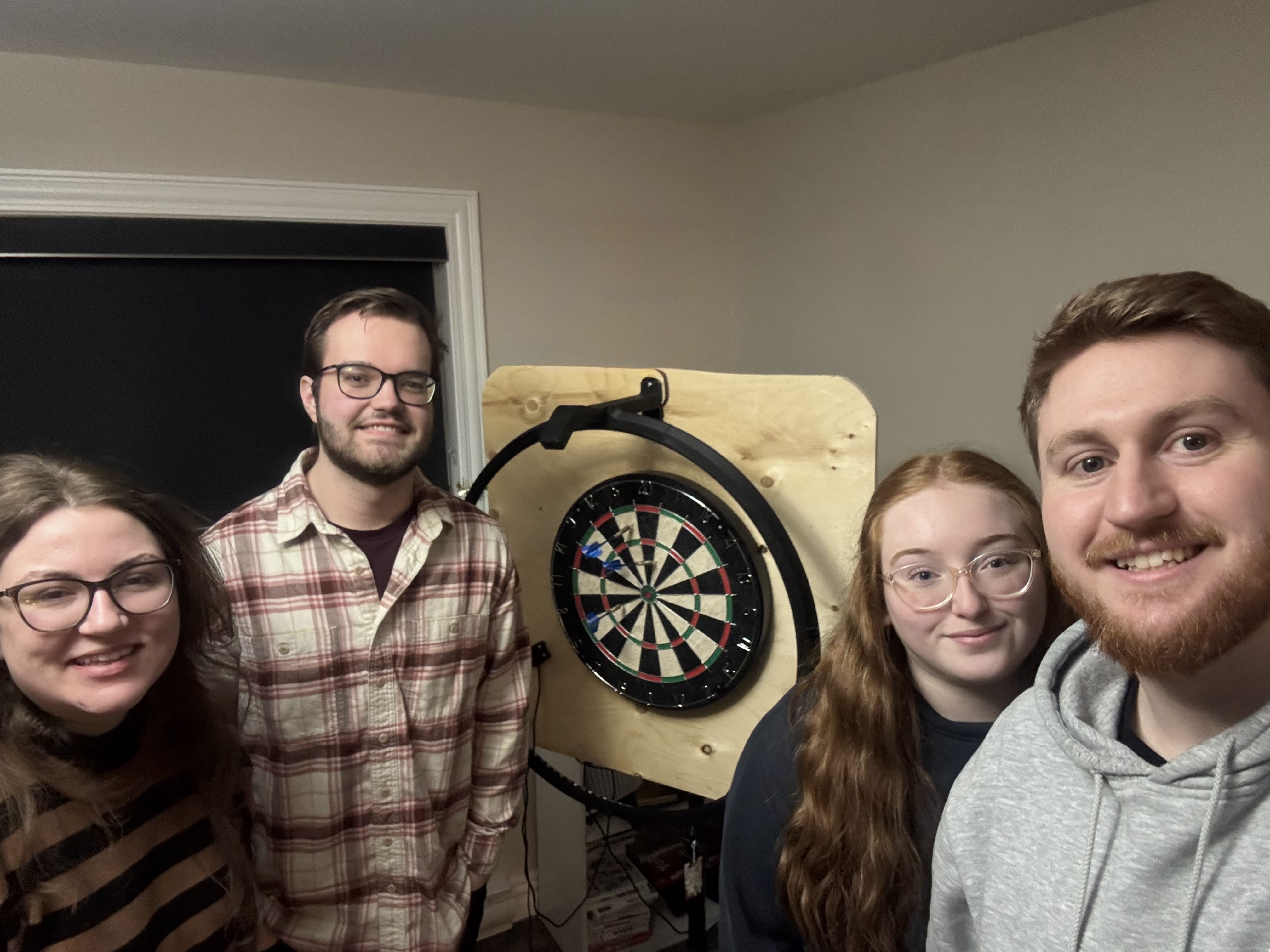
Jordan Brown, Shawna Edwards, Shane Hillier, Noel Rowsell
DartBuddy is a computer-vision-based automatic scoring system designed to improve the traditional game of darts. Using three cameras, built-in lighting, and image processing, the system detects dart tip locations and calculates scores in real-time. The results are displayed in an intuitive user interface and the system features support for multiple game modes.

RoomRelay
Russell Corbett, Matthew Jones, Aaron Oates, Jadzia Penney
The RoomRelay is a privacy-focused smart home assistant, designed to work completely offline, protecting user data.